Migrant Policy Withdrawn in South Africa After Violent Riots
10/11/2026 / By Chase Codewell
South Africa’s Department of Home Affairs (DHA) said the policy produced serious consequences that could not have been foreseen and placed DHA officials at risk. The decision marks a retreat by the department, which had opposed the court’s order.
Constitutional Court Ordered Broader Asylum Consideration
After the ruling, the department said it would begin a new process to develop an approach to comply with the order. The Constitutional Court had previously addressed asylum issues this year.
In May, the court ruled that foreign nationals cannot reapply for asylum once their application has been rejected, saying that allowing unlimited repeat applications without proper legislation could create a “never-ending cycle,” preventing deportations and causing administrative chaos [1]. Home Affairs Minister Leon Schreiber welcomed that ruling as a “major victory” against the “abuse” of the refugee system [1].
Riots Erupt in Durban and Johannesburg
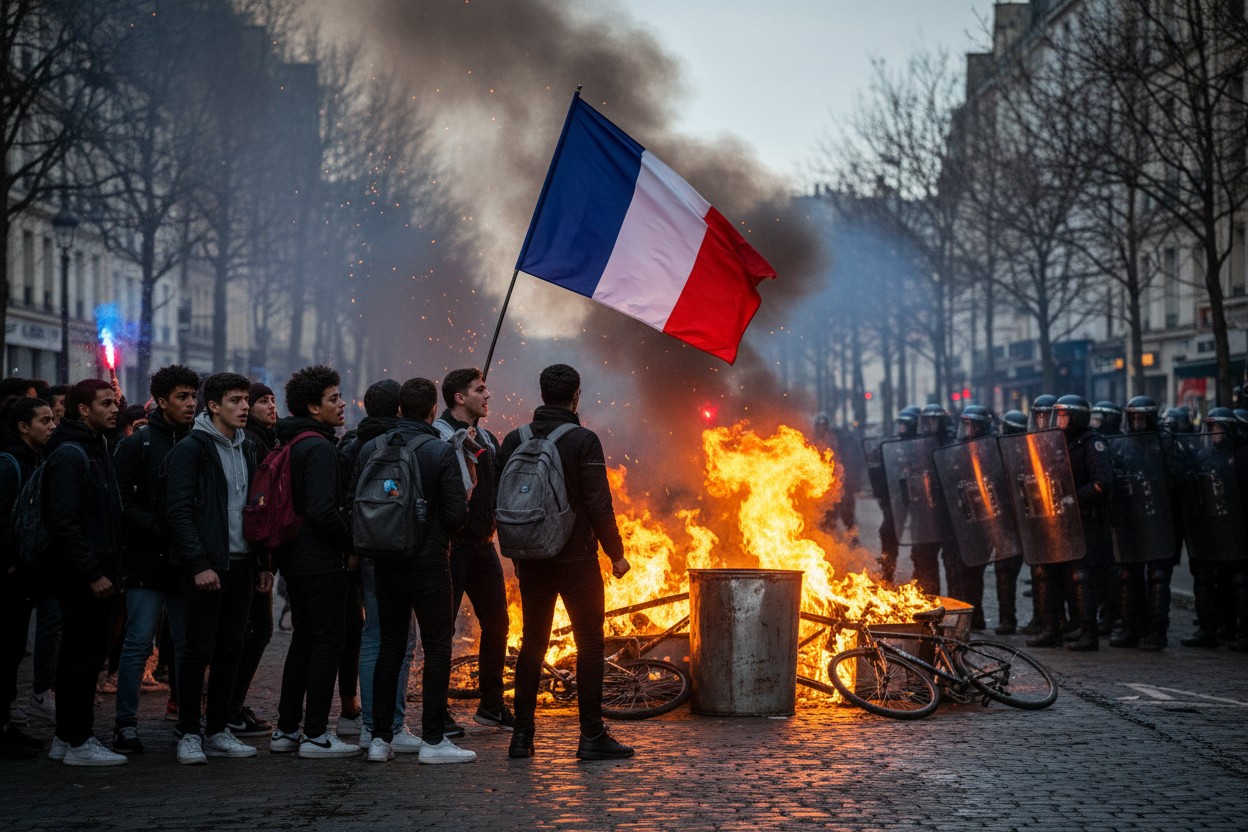
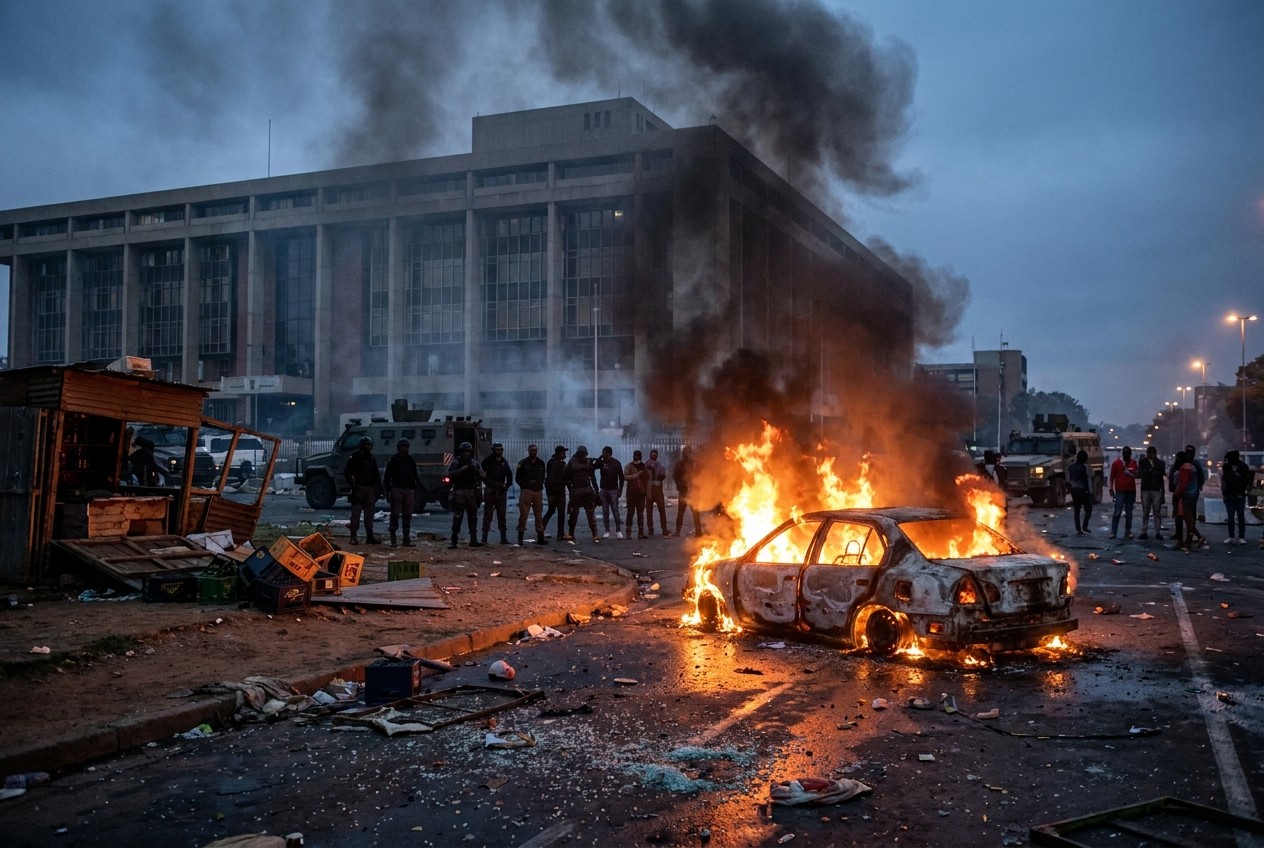
People gathered in Durban and parts of Johannesburg on Thursday, Oct. 8, to demonstrate against the ruling, according to local media reports. Crowds stormed spaza shops – described as small, often informal convenience stores run by foreigners, and set fire to at least 24 vehicles [2]. South African police said 10 vehicles were torched in Soweto and another 14 in Durban during the unrest [3].
The violence came amid growing anger over a court ruling requiring the government to remove barriers that had prevented some migrants from applying for asylum [2]. The government blamed disinformation about the court ruling on asylum seekers for the unrest [4][2].
Unverified claims about the ruling circulated widely before the protests. South Africa’s government has previously condemned the circulation of what it called “fake videos and images” described by some as recordings of attacks on foreign nationals, as diplomatic tension increased between South Africa and other African nations following accusations that xenophobic violence was on the rise [5].
Home Affairs Cites Unforeseen Consequences
The DHA said it would halt implementing the new policy because of serious consequences that could not have been foreseen, according to its announcement.
The withdrawal followed operational challenges at refugee reception offices. The directive had triggered overcrowding at those offices and intensified tensions between anti-immigration demonstrators and foreign nationals, according to reports [6][7]. DHA has not specified a timeline for the new process.
Immigration Remains Contentious Issue
Tensions have repeatedly led to riots in recent years, with violence sometimes turning deadly. The unrest is not isolated to recent months. In 2008, 62 people were killed in anti-immigrant riots and thousands were displaced [8].
Earlier this year, the government processed thousands of foreign nationals for deportation or repatriation. Justice Minister Mmamoloko Kubayi said 86,596 cases were handled from June 14 to August 20 through coordinated law-enforcement operations, with Malawian nationals forming the largest group processed [9].
Developing Story
The situation remains a developing story, with more information expected to follow. The DHA said it would continue to address the court order through a new process.
South Africa’s government has also sought continental engagement on migration issues. Clayson Monyela, head of public diplomacy at the country’s Department of International Relations and Cooperation, said the African Union agreed to discuss migration following tensions over illegal immigration [10].
References
- South Africa’s top court bars repeat asylum applications. https://bbc.com/news/articles/cy42yx1kn90o
- Cars torched and shops looted as anti-migrant violence erupts in South Africa. https://bbc.com/news/articles/cwm24v45p4jgo
- South Africa withdraws asylum directive after violent anti-migrant …. https://english.news.cn/20261009/e4f550403ac14fcaabd28d0e2b0f0fcd/c.html
- South Africa protests turn violent amid rage over asylum …. https://www.aljazeera.com/news/2026/10/8/south-africa-protests-turn-violent-amid-rage-over-asylum-ruling
- South Africa condemns ‘fake videos’ of alleged xenophobic attacks. https://bbc.com/news/articles/cx21g3vl63zo
- South Africa scraps asylum directive after anti-immigrant violence. https://www.dailysabah.com/world/africa/south-africa-scraps-asylum-directive-after-anti-immigrant-violence
- Home Affairs Withdraws Asylum Directive After Violent Anti-Immigrant …. https://www.atnews.co.za/home-affairs-withdraws-asylum-directive-after-violent-anti-immigrant-protests-leave-cars-torched-in-gauteng-kzn/
- South Africa’s anti-migrant unrest led over 160,000 to flee. https://www.france24.com/en/live-news/20260721-south-africa-s-anti-migrant-unrest-led-over-160-000-to-flee
- South Africa processes over 86,000 foreigners for deportation. https://www.rt.com/africa/645384-south-africa-processes-thousands-foreigners-deportation/?utm_source=rss&utm_medium=rss&utm_campaign=RSS
- African Union weighs in on South Africa’s immigration unrest. https://www.rt.com/africa/643705-au-weighs-south-african-migration-debate/?utm_source=rss&utm_medium=rss&utm_campaign=RSS
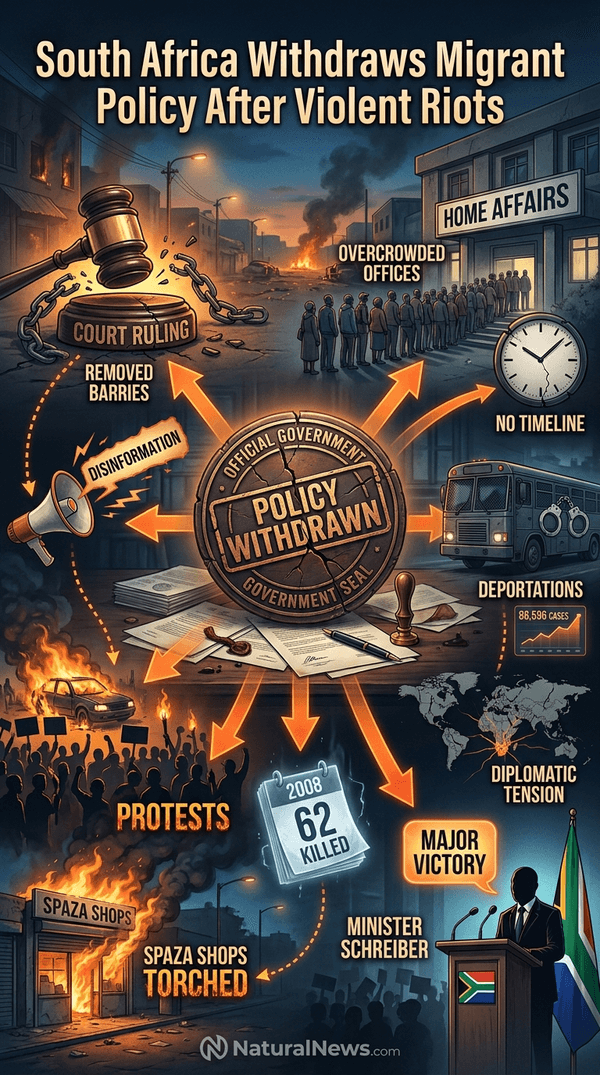
Explainer Infographic
Submit a correction >>
Tagged Under:
big government, civil unrest, Cyril Ramaphosa, Department of Home Affairs, deportation, Globalism, illegal immigration, migrant policy, migrants, military, national security, Police, progress, protests, Resist, rioting, sanctions, South Africa, violence
This article may contain statements that reflect the opinion of the author
RECENT NEWS & ARTICLES